How to Create a Dramatic Spotlight Effect in the Sky in Photoshop

How to Create a Dramatic Spotlight Effect in the Sky in Photoshop

Adding a dramatic spotlight effect to your images can transform an ordinary sky into a captivating scene, drawing the viewer's eye and enhancing the overall mood. This technique is particularly effective for emphasizing specific elements or creating a sense of grandeur and focus within a composition.

In this tutorial, you will learn how to integrate a realistic spotlight with text into a stormy sky, utilizing Photoshop's powerful blending modes, transformation tools, and non-destructive editing techniques to achieve a seamless and impactful visual.

Watch the Tutorial

Video by Blue Lightning. Any links or downloads mentioned by the creator are available only on YouTube

Integrating Light and Perspective in Digital Compositing

Creating realistic light effects in digital art, such as a spotlight, involves more than simply adding a bright shape. It requires a nuanced understanding of how light interacts with its environment and how perspective influences the appearance of objects. When compositing elements like text into a scene, accurately matching the perspective and luminosity is crucial for believability.

Photoshop's blending modes, particularly Overlay, play a vital role in this process by allowing layers to interact based on their luminosity, enabling the spotlight to naturally illuminate the underlying clouds. Furthermore, the Blend If feature within Layer Styles offers precise control over how pixels from one layer blend with those of the layers beneath it, based on their shadow and highlight values. This advanced blending capability is essential for seamlessly integrating light effects and ensuring they appear as part of the original scene rather than an added overlay.

Achieving a natural look also depends on correctly applying perspective transformations and warping. These tools allow artists to manipulate the shape and angle of elements to align with the scene's vanishing points, ensuring that the text within the spotlight appears to recede into the distance or conform to the contours of the clouds. This attention to detail in both light interaction and spatial positioning elevates a simple effect into a compelling visual narrative.

Practical Tips for Spotlight Effects

  • Utilize Smart Objects for text layers to enable non-destructive editing and easy replacement of text without redoing effects.
  • Employ the Overlay blend mode for the spotlight and text layers to allow them to interact naturally with the underlying cloud luminosity.
  • Master perspective transformations using keyboard shortcuts (e.g., Ctrl/Cmd + Alt/Option + Shift for independent corner manipulation) to align text realistically with the spotlight's angle.
  • Use the Transform Warp tool with a custom grid (e.g., 3x3) to subtly deform text, simulating how light might interact with uneven surfaces like clouds.
  • Leverage the Blend If feature in Layer Styles to seamlessly blend the spotlight and text into the background based on luminosity, creating a more integrated appearance.

Explore more techniques for enhancing skies and manipulating light in your Photoshop projects with these additional resources.

Create colorful dramatic skies with a simple blending trick in Photoshop
In this Photoshop tutorial by Unmesh Dinda from PiXimperfect you will learn how to extract amazing details from the sky, bring out the clouds, and add brilliant colors just using the Blend If sliders in Photoshop. Learn how to add drama, mood, and details to your skies by utilizing the power of Blending Options, Blend Modes, and Layers. In this video, we will simply paint the sky with the colors we desire and the details will simply follow. Whether you want to add the colorful sunset lights or
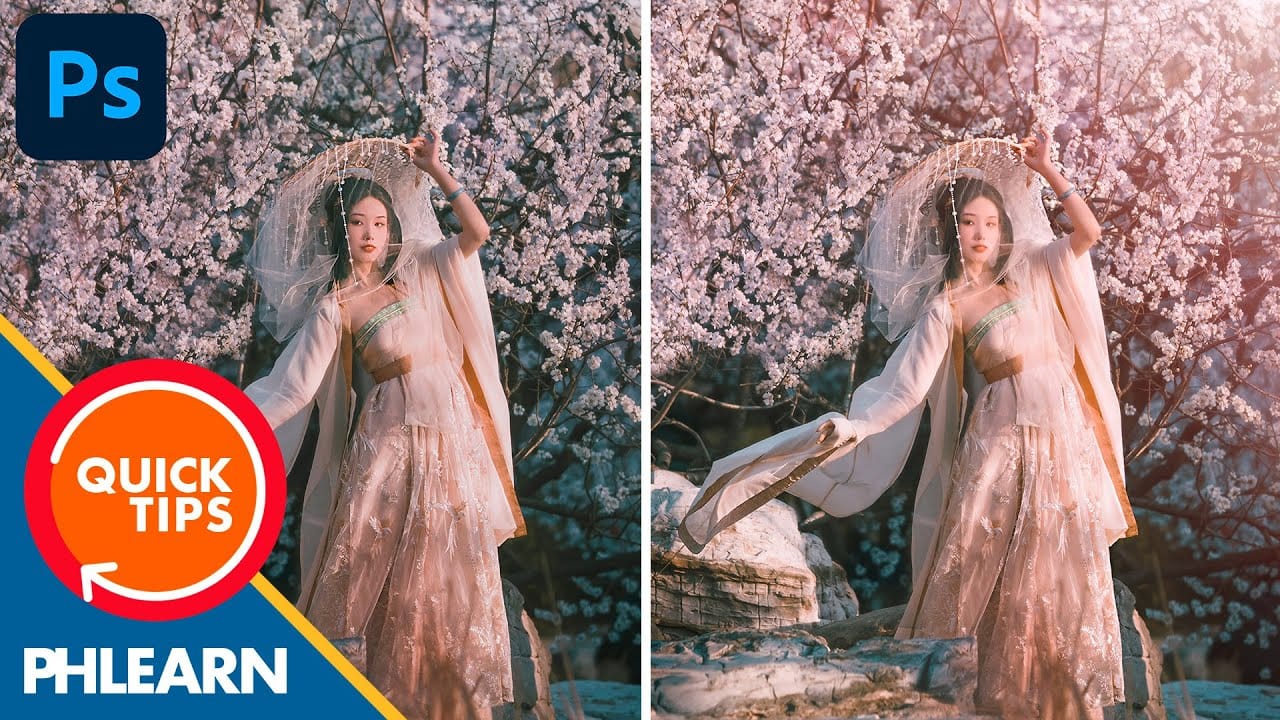
How to create a sun glow effect in Photoshop
In this tutorial, Aaron Nace shows how to add a vibrant sun glow effect to your photos with ease. The process involves a few straightforward steps to simulate the warm, radiant look of sunlight. Aaron explains how to use blending modes, gradients, and layer adjustments to achieve a natural and eye-catching glow. The tutorial includes a free Sun Glow Gradient, which you can download and use immediately to enhance your images. This effect is perfect for adding a dreamy, sunlit atmosphere to your
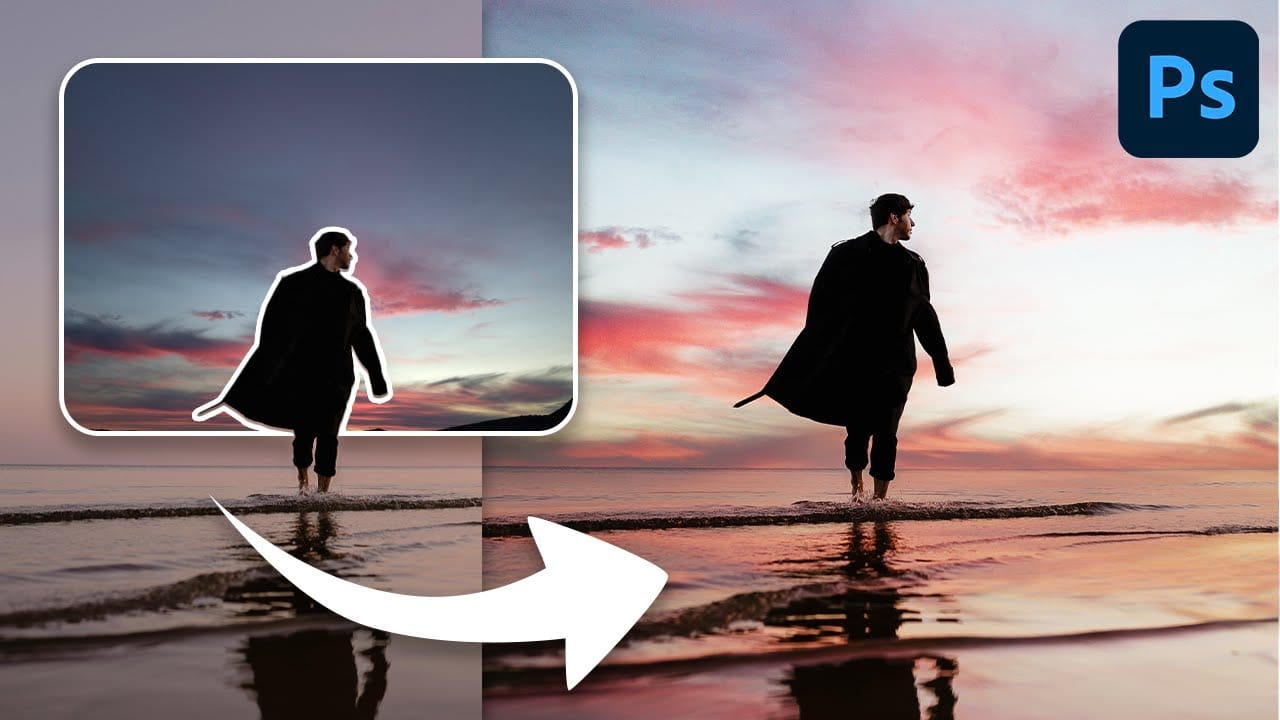
How To Easily Change The Sky In Photoshop
In this lesson, you’ll explore how to replace skies in Photoshop effortlessly. The tutorial begins by showing you how to access the Sky Replacement Panel. This tool gives you control over enhancing images with dynamic skies. You’ll also learn how to add a new sky to your photo, transforming the atmosphere and overall impact of the image. The video breaks this step down for you, making it easy to follow along. Additionally, the tutorial covers creating realistic sky reflections. This step is cr
Add clouds to a sky in Photoshop
In this Photoshop tutorial by Phlearn, you’ll learn how to replace the sky in an image, ensuring it complements the original photo in terms of color, contrast, and tone. Start by using the Move Tool to drag and drop the new sky onto your image, then turn off the layer. Select the old sky using a selection tool like the Magic Wand Tool. Once the selection is refined, turn the new sky layer back on and click the Layer Mask button to mask in just the sky. Unlink the layer from its mask to position

Get tutorials & freebies delivered to you.

Subscribe to the Photoshop Roadmap newsletter, a weekly roundup of new tutorials, insights and quality downloads, trusted by 6500+ readers.

You might also like

How to Enhance Skin Tones Using Gradients in Photoshop

Skin tones often appear washed out or lifeless in photographs due to challenging lighting conditions or camera settings. This gradient-based technique brings vibrancy back to portraits while creating natural-looking dimensional highlights that draw the viewer's eye to key facial features. The method uses Color Range selections combined with...

7 Signs You're a Photoshop Pro - Skill Assessment Guide

Professional Photoshop mastery isn't about memorizing every menu or filter. It's about developing efficient workflows, understanding core concepts, and building muscle memory for essential techniques. Real pros focus on the right tools for their specific needs rather than trying to learn everything. This comprehensive assessment covers...

How to Use Generative Upscale with Multiple AI Models in Photoshop

Pixelated vintage photos and low-resolution images no longer need to stay small. Photoshop's Generative Upscale feature now offers multiple AI models to enlarge images up to 4x their original size while adding remarkable detail and clarity. This new feature includes three distinct AI models—Adobe's Firefly...

Create a Pointillism Effect in Photoshop

Pointillism, the late 19th-century painting technique that uses small dots of color to form images, creates a distinctive artistic look where colors blend optically when viewed from a distance. This digital recreation technique transforms ordinary photographs into artwork that mimics the style of masters like Paul Signac. The process combines...

How to Convert WebP to JPEG in Bulk Using Image Processor

Converting large folders of WebP images to JPEG format can be time-consuming when done manually. Image Processor provides an efficient solution for batch conversion, automatically handling multiple files while maintaining quality settings and organization. This method works with any image format conversion and creates organized output folders, making it ideal...

How to Use Generative Credits in Adobe Creative Cloud: Standard vs Premium Features

Adobe's generative AI features transform how creatives work, but understanding which tools consume credits can save you time and budget frustration. The credit system divides features into standard and premium tiers, with different consumption rates based on processing complexity. Knowing the difference between assistive AI tools that cost...

You’ve successfully subscribed to Photoshop Roadmap
Welcome back! You’ve successfully signed in.
Great! You’ve successfully signed up.
Success! Your email is updated.
Your link has expired
Success! Check your email for magic link to sign-in.