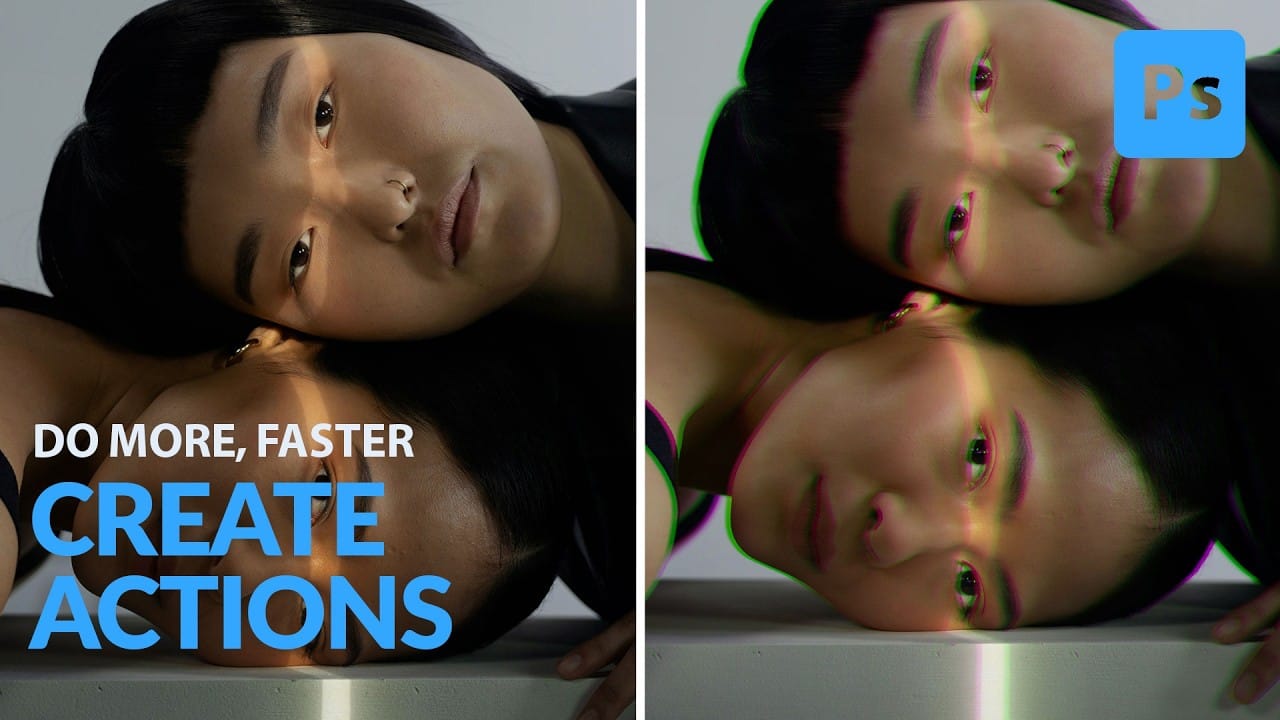
Create an Action to Transform your Photos into Impressionist Paintings

Create an Action to Transform your Photos into Impressionist Paintings

Digital art techniques allow for creative transformation of ordinary images into unique visual pieces. This video explores a method to convert photographs into pointillist-style paintings within Photoshop.

Viewers will learn how to set up a reusable Photoshop Action, automating the process of applying artistic filters and color adjustments. This enables quick application of a distinct impressionist aesthetic to various images, enhancing their artistic appeal.

Watch the Tutorial: Automate Pointillist Effects

Video by Blue Lightning. Any links or downloads mentioned by the creator are available only on YouTube

The Art of Pointillism in Digital Photography

Pointillism is an art technique using small, distinct dots of pure color applied in patterns to form an image. This method, popularized by artists like Georges Seurat and Paul Signac, relies on the viewer's eye to optically blend the colors, creating a vibrant and luminous effect.

Translating this classic style into digital art involves simulating these distinct dots through pixel manipulation. Photoshop's filters can approximate the visual characteristics of pointillist brushwork, while the use of color matching can help unify the new artwork with a desired artistic palette, such as that found in impressionist masterpieces.

Automating this complex process with Photoshop Actions streamlines the artistic workflow. Actions allow designers and photographers to consistently apply a specific sequence of steps, ensuring a uniform artistic signature across multiple images without manual repetition.

Practical Tips for Creating Pointillist Actions

  • Crop your photo to the suggested dimensions (e.g., 750px height, 150 resolution) before recording the action to ensure consistent filter results.
  • Open your color source image (like the provided Monet painting) in Photoshop before using the Match Color adjustment to ensure it appears in the source list.
  • Adjust the Levels layer after the action has run on a new photo to fine-tune brightness and contrast, as these characteristics vary per image.
  • Name your layers (e.g., "Pointilize," "Dry Brush") within the action to maintain organization and clarity in your document structure.
  • Test your recorded action on multiple photos to verify its consistency and identify any steps that might require manual adjustment post-action.

More Tutorials about Photo Painting Effects

Explore additional resources to further enhance your skills in transforming photographs into various artistic styles.
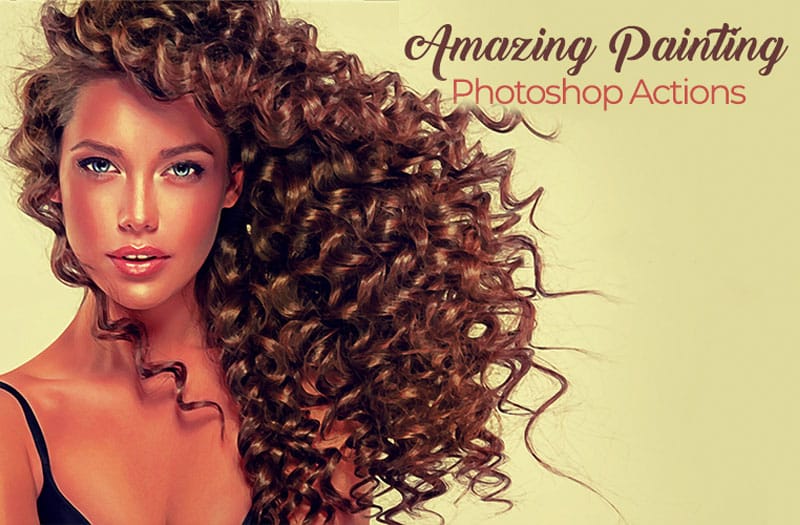
8 Photoshop Actions to transform your photos into works of art
So, You’re on the Lookout for Some Oil Paint Photoshop Actions, then you would do well to take a look at the PhotoWhoa Oil Paint Photoshop Actions that does just that. This is like nothing you’ve ever seen before. This is the way to take your photos from ordinary to a piece of art that is worthy of any museum. Digital paintings are beautiful on their own, blending the beauty of handmade art with the wonders and convenience of modern technology. It is a blend of talent and science that combines
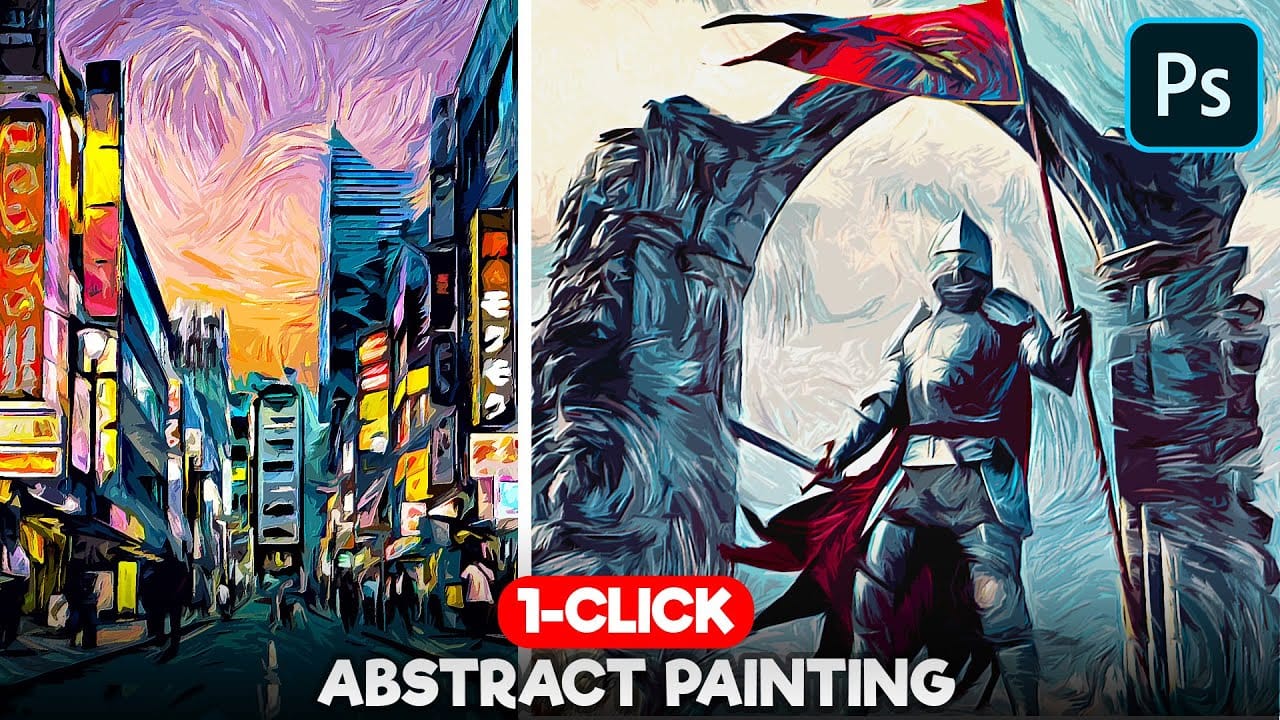
1-Click Photo to Digital Painting Effect in Photoshop
In this digital painting effect Photoshop Tutorial, you’ll learn how to make a quick digital art effect out of any image in a few seconds! You’ll learn how to use a simple combination of filters and patterns to make a realistic digital painting effect in photoshop. You will also learn how to use smart objects and reuse them to reapply this painting effect in photoshop with a SINGLE CLICK. Watch tutorial
How to Create and Play Back Actions in Photoshop
This Photoshop tutorial from Aaron Nace at Phlearn offers a clear process for blending graphics with portraits. You will learn how to use the Super Zoom feature, which allows you to upscale graphics while maintaining their original resolution. This is crucial for ensuring that your images remain sharp and professional. The tutorial also covers the use of Gradient Maps to achieve effective color matching between your elements. This technique can enhance the visual coherence of your project. Addi
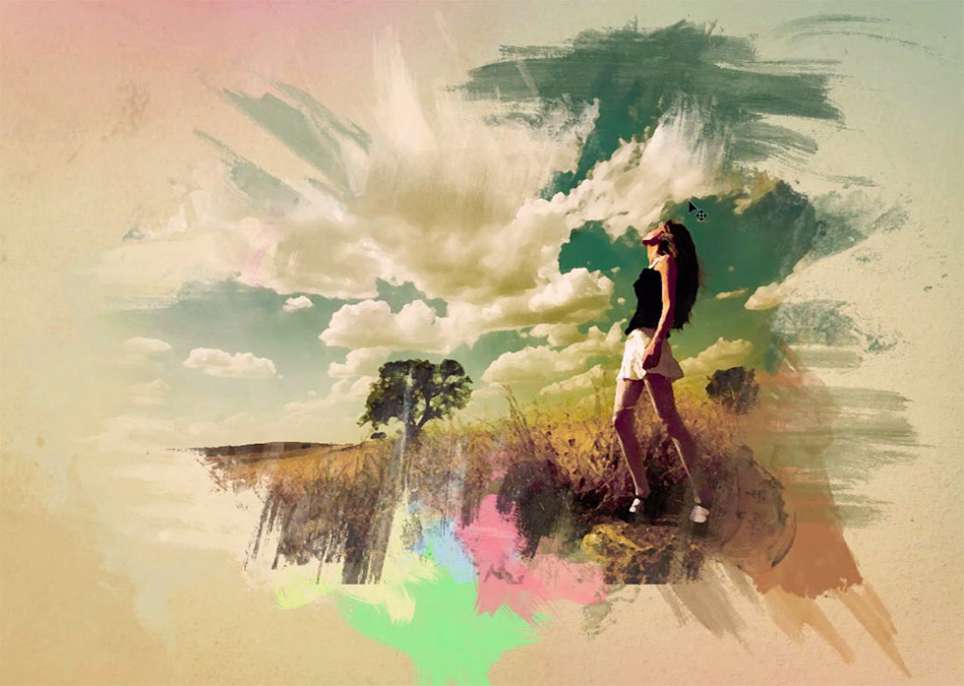
How To Make a Watercolor Photo Manipulation In Photoshop
In this tutorial you will learn how to make a creative mix of watercolor brushstrokes and photos in Photoshop. Download brushes and images. More

Get tutorials & freebies delivered to you.

Subscribe to the Photoshop Roadmap newsletter, a weekly roundup of new tutorials, insights and quality downloads, trusted by 6500+ readers.

You might also like

Create a Liquid Gel Logo Effect in Photoshop

Liquid gel effects transform flat logos into dimensional, glossy designs that appear to bubble and flow. This technique uses multiple layer styles and strategic duplication to build depth, creating surfaces that catch light like thick, viscous liquid. The method combines gradient overlays, bevel effects, and inner glows across several duplicated...

How to Use Photoshop's AI Sharpen Filter and When It's Worth the Cost

Photoshop's new AI Sharpen filter promises one-click sharpening powered by advanced algorithms. This tool uses technology from Topaz Labs to enhance image details without manual adjustments, but it comes with a significant cost in credits. Understanding when to use this automated approach versus traditional methods like the High...

How to Use Harmonize and Generative Upscale Tools in Photoshop

Creating realistic photo composites requires matching lighting and color between different images—a traditionally time-consuming process. Two new AI-powered tools in Photoshop solve these challenges: Harmonize automatically adjusts lighting and shadows to blend subjects seamlessly into backgrounds, while Generative Upscale enlarges small images without losing detail. These tools work together...

How to Create Convincing Scale Effects in Photoshop Composites

Creating believable scale effects requires more than simply resizing objects—it demands understanding how light, perspective, and atmospheric conditions change with distance. When tiny subjects appear massive or giant objects seem miniature, viewers should feel the illusion is completely natural. This technique combines careful attention to lighting consistency, depth cues,...

How to Flip Images Horizontally and Vertically in Photoshop

Flipping images is a fundamental technique that can dramatically change the composition and impact of your photos. Whether you need to correct the orientation of a subject, create mirror effects, or simply improve the visual flow of your design, knowing how to quickly flip images both horizontally and vertically gives...

How to Use Nano Banana Pro in Photoshop for Background Replacement and Scene Changes

Nano Banana Pro transforms how you place subjects into new environments in Photoshop. This advanced AI model maintains perfect subject likeness while seamlessly integrating them into any background you can imagine. The tool excels at matching lighting, preserving facial features, and even adapting clothing to complement new scenes, all through...

You’ve successfully subscribed to Photoshop Roadmap
Welcome back! You’ve successfully signed in.
Great! You’ve successfully signed up.
Success! Your email is updated.
Your link has expired
Success! Check your email for magic link to sign-in.