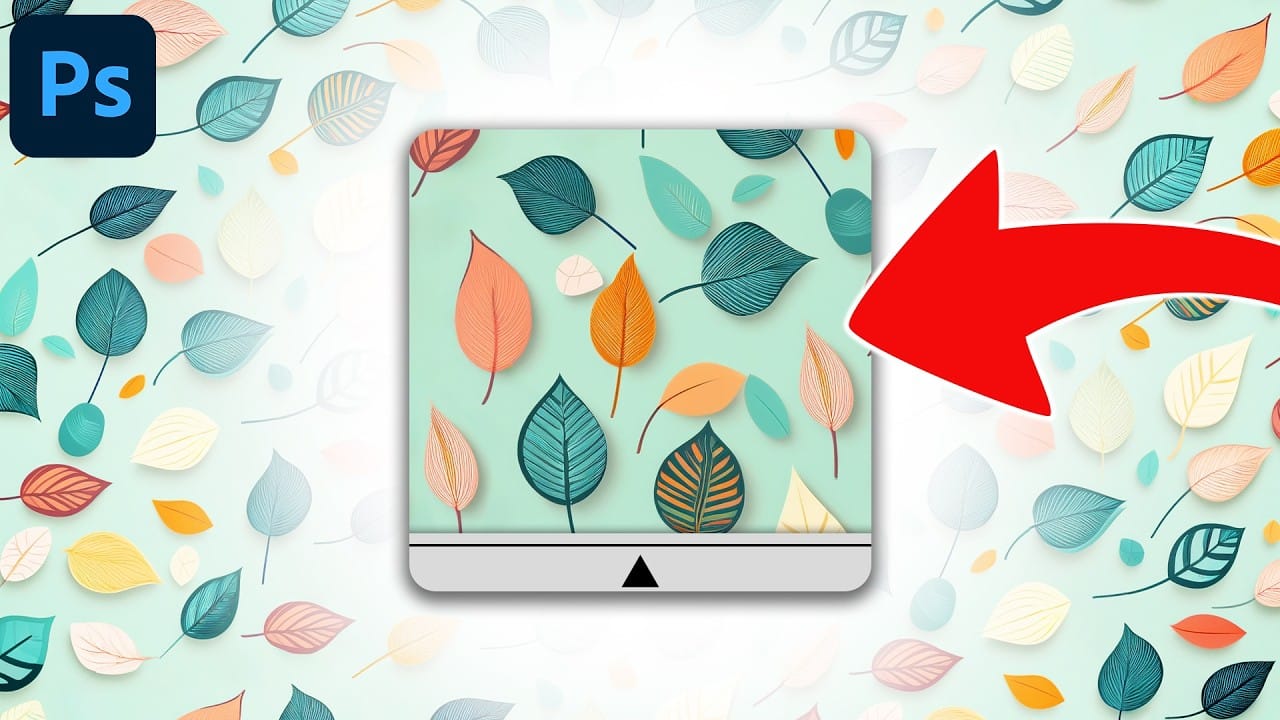
How to create seamless patterns in Photoshop with graphics or images

How to create seamless patterns in Photoshop with graphics or images

Seamless patterns are a fundamental element in graphic design, offering endless possibilities for backgrounds, textures, and various creative projects. Mastering their creation allows designers to elevate their work, ensuring visual continuity and professional polish across any application.

This tutorial provides a clear guide on how to produce these versatile patterns in Photoshop, whether you are working with custom graphics or existing images. You will learn the essential techniques to achieve perfectly repeating designs that enhance your digital toolkit.

Watch the Full Tutorial

Video by Brendan Williams. Any links or downloads mentioned by the creator are available only on YouTube

Understanding the Offset Technique for Seamless Designs

The core of creating seamless patterns in Photoshop often relies on the clever use of the Offset filter. This powerful tool shifts the image's edges to the center, effectively revealing how the pattern will tile. For graphic-based patterns, starting with a square canvas and ensuring no elements touch the edges simplifies this process significantly, allowing for precise adjustments.

When working with images, the process introduces an additional step: mending the visible seams created by the offset. Techniques like Content Aware Fill provide a quick initial repair, but often require further refinement. The Clone Stamp Tool becomes indispensable for meticulously blending and removing repeating elements, ensuring a perfectly smooth and continuous texture.

  • A square canvas with equal dimensions simplifies calculating offset values for graphic patterns.
  • The Offset filter is crucial for revealing how pattern edges will align and repeat.
  • Content Aware Fill offers an initial solution for blending seams in image-based patterns.
  • The Clone Stamp Tool is essential for meticulous touch-ups and eliminating noticeable repetitions.

Practical Tips for Creating Seamless Patterns

  • Design graphics without extending them past the canvas edges to simplify the offsetting process.
  • Duplicate and merge all graphic layers into a single layer before applying the Offset filter.
  • Use half of your square canvas's dimensions for both horizontal and vertical Offset values to perfectly center the seams.
  • Manually adjust horizontal and vertical Offset values for non-proportionate images until seams are visible and centered.
  • Utilize Content Aware Fill for initial seam removal on image patterns, then refine with the Clone Stamp Tool for a flawless finish.

More Tutorials about Seamless Patterns

Explore additional resources to deepen your understanding of seamless pattern creation and expand your design capabilities.
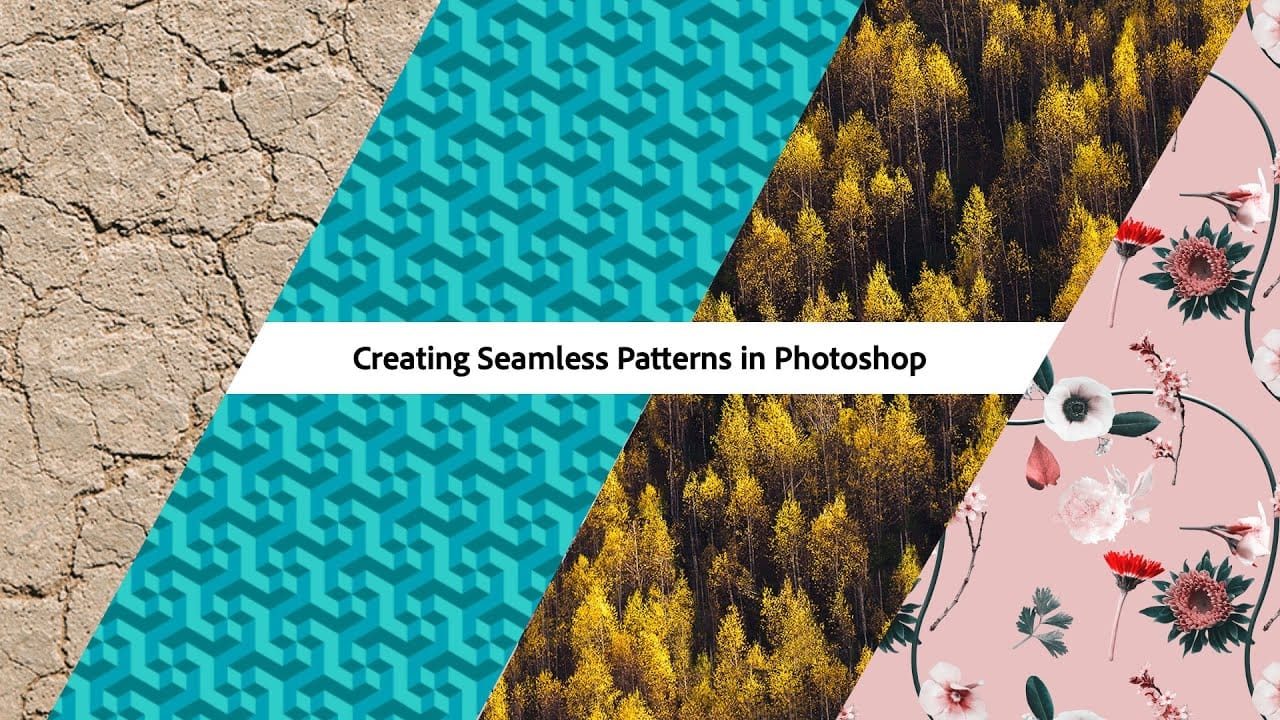
Creating Seamless Patterns in Photoshop
In this tutorial, Adobe Evangelist Paul Trani delves into the process of creating seamless patterns in Photoshop. Seamless patterns are essential for various design projects, from backgrounds to textiles, and mastering them can significantly enhance your design capabilities. Paul takes you through the entire process, from setting up your initial design to ensuring that the pattern tiles seamlessly across any surface. He covers essential techniques such as defining pattern edges, adjusting spaci
3 Powerful Techniques to Create Seamless Patterns in Photoshop
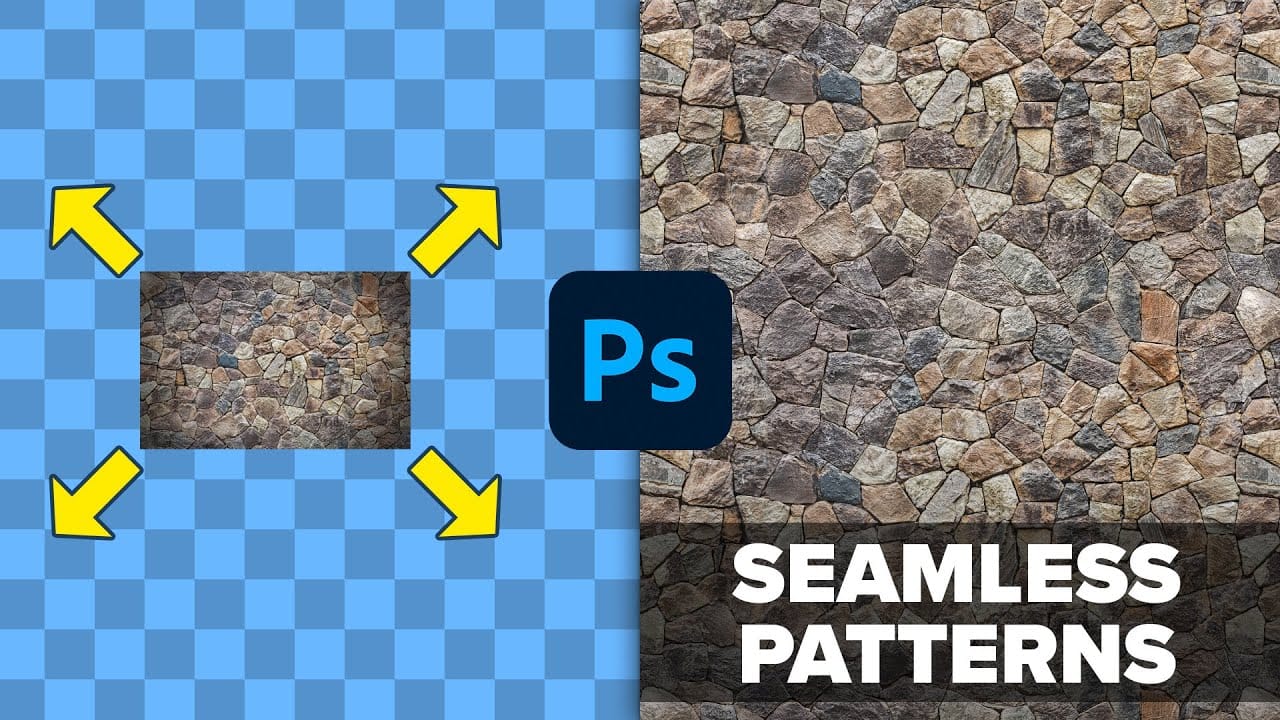
This tutorial by Jesus Ramirez from the PTC Photoshop Training Channel introduces three effective techniques for creating seamless patterns in Photoshop. If you have ever wanted to transform a simple photo into a beautiful repeating design, this is a great place to start. You will become familiar with essential tools such as Pattern Preview and Generative Fill, which are crucial in this process. These tools will help simplify your workflow and enhance your designs. Additionally, you will discov
How To Create Detailed Graphic Patterns in Photoshop
Recently, the author has been exploring the various graphics associated with hydrodipping, a popular image transfer technique used to apply patterns to a wide range of objects, from vehicle parts to sneakers. Browsing through these designs has inspired the author to create an intricate graphic pattern of their own using Photoshop. After extensive experimentation, the author has discovered a useful technique that allows for the rapid filling of an entire canvas with randomly placed graphics. Thi
Using AI to Create Seamless Patterns For Photoshop
This Photoshop tutorial guides you through creating a seamless pattern using AI technology. By combining Adobe Firefly with Photoshop, you can generate unique pattern designs that can be easily transformed into usable patterns for your projects. This technique is especially useful for crafting new image backgrounds or enhancing your texture library with overlays. The process begins with crafting the right prompt, so it’s important to experiment with various inputs to achieve the desired results

Get tutorials & freebies delivered to you.

Subscribe to the Photoshop Roadmap newsletter, a weekly roundup of new tutorials, insights and quality downloads, trusted by 6500+ readers.

You might also like

How to Use the Vectorscope in Camera Raw to Correct Skin Tones

Monitors vary, room lighting shifts, and your eyes adapt — none of which makes for reliable skin tone judgments. Camera Raw's vectorscope gives you a measurement-based alternative, displaying hue and saturation data visually so you can align skin tones to a scientifically accurate target line, regardless of your...

How to Fix the Photoshop Scratch Disk Full Error

The scratch disk full error stops Photoshop mid-edit and can even prevent it from opening at all. Understanding what a scratch disk actually is — and knowing where to look — makes the difference between a quick fix and repeated frustration. Watch the Video Practical Tips These steps address the most...

Using Photoshop's Light Adjustment Layer for Non-Destructive Tonal Control

Photoshop's Light adjustment layer brings Camera Raw's core tonal controls — exposure, contrast, highlights, shadows, whites, and blacks — directly into the layers panel as a fully non-destructive, maskable layer. This makes it possible to apply precise tonal corrections to specific areas of an image without ever...

How to Turn a Photo Into a Fine Art Painting in Photoshop

A photograph carries detail that a painting would simplify, and that gap is exactly where this technique operates. By working through a structured layer-based workflow in Photoshop, you can reduce photographic sharpness, introduce painterly texture, and guide the eye the way a traditional artist would — all without picking up...

You’ve successfully subscribed to Photoshop Roadmap
Welcome back! You’ve successfully signed in.
Great! You’ve successfully signed up.
Success! Your email is updated.
Your link has expired
Success! Check your email for magic link to sign-in.