
Quick and Easy way to create Glowing Lights Photoshop Brushes

Quick and Easy way to create Glowing Lights Photoshop Brushes

This time, I'll commit myself to tech you a nice illustration technique in a few steps, rather than my usual detailed explanations. This tutorial explains how to create glowing lights brushes using the Lens Flare filter included in the default installation of Adobe Photoshop.

This technique is amazingly simple, but the resulting brushes are so cool that you might find yourself spending your Saturday nights experimenting with brush dynamics and blending settings instead of hanging out with a bunch of bums.

If you can’t wait to start painting, download these glowing lights brushes below. But don’t be lazy—read the tutorial to create your own.

Step One: Create the Base Glowing Light

Create a new 500×500 pixels RGB document and fill the background with black. Go to Filters > Render > Lens Flair… and use the same settings below. It is important that you center the position cross the most accurately you can. Anyway, using different positions may result in other interesting effects.
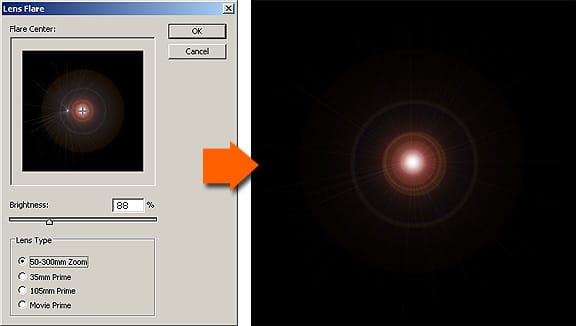
In this example, setting the Brightness = 88% will make the surrounding rings and glow fade to none before reaching the borders of the image. This will allow the final brush to blend smoothly with the background.

Step Two: Invert the image and convert it into a brush tip

Select the image with Select > All and invert the colors using Image > Adjustment > Invert. The result will be the following:
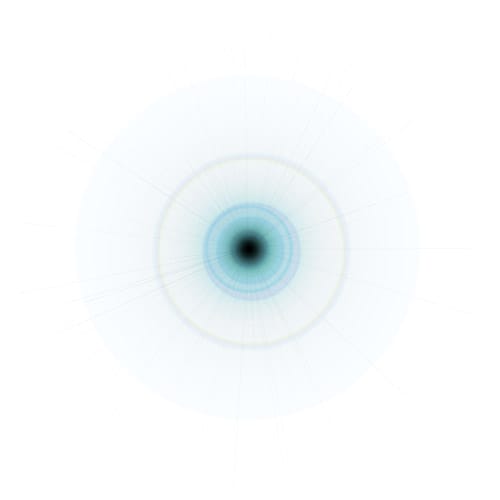
Now select the whole image again and go to Edit > Define Brush Preset. Now your brush has been successfully added to your brushes list.

The following image shows some simple examples of what you can achieve with this brush:
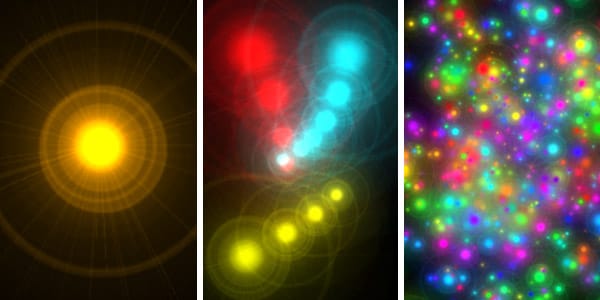
The first and second examples were achieved by superimposing brush clicks with different colors sizes and blending options. The third example was created using different color and shape dynamics. There is nothing new in this. It’s all in the brush tip and your creativity.

Two variations of the same brush

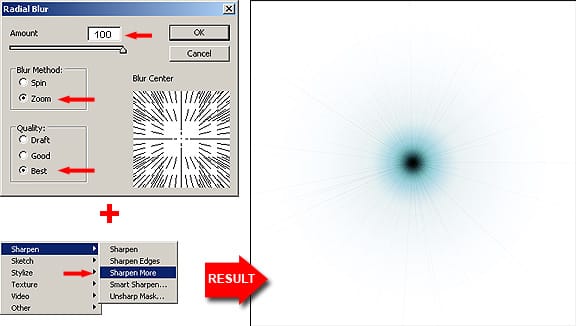
For the first alternative we will apply a Radial blur filter and a Sharpen More filter. The Radial blur will get rid of the most visible halos surrounding the glow. And the Sharpen More filter will increase the visibility of the light rays.
For the second alternative we will just apply a Motion blur filter. This will give  the glow a different shape.
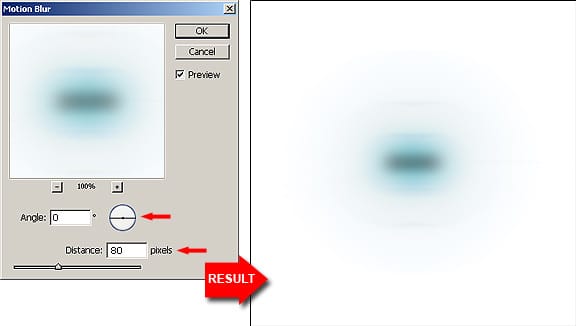
The following examples were made with these two new brushes:
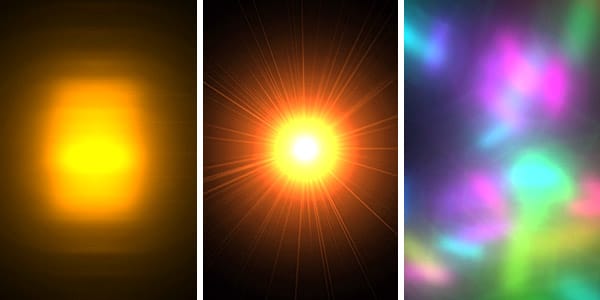
These examples were created the same way than the previous ones. Play with the brush tool blending modes (not with the layer blending modes) and also play with the brush dynamics. These settings can give you a lot of cool effects.

Get tutorials & freebies delivered to you.

Subscribe to the Photoshop Roadmap newsletter, a weekly roundup of new tutorials, insights and quality downloads, trusted by 6500+ readers.

You might also like

How to Check Your Generative Fill Credit Balance in Photoshop

Keeping track of your AI credit usage becomes essential when working with premium generative features. Understanding your remaining balance helps you budget your edits and avoid unexpected interruptions during important projects. The credit system divides features into standard tools (like basic generative fill) that don't consume credits, and...

How to Create Realistic Depth Blur Effects in Photoshop

Creating professional depth of field effects can transform flat images into dynamic photographs with natural-looking focus transitions. Two powerful methods in Photoshop offer different advantages: Neural Filters provide automated depth detection with atmospheric effects like haze, while Camera Raw Filter delivers precise manual control with customizable bokeh shapes. Both techniques...

Three Professional Methods to Fix White Balance in Photoshop

Color casts can ruin even the best photographs, making whites appear yellow, blue, or green instead of neutral. Poor white balance destroys the natural look of your images and creates an unprofessional appearance that's immediately noticeable to viewers. These three techniques provide increasingly precise control over white balance...

Creating Dark Moody Wildlife Photo Edits in Photoshop

Dark, moody wildlife photography transforms ordinary animal portraits into dramatic, atmospheric pieces that capture the mystery and power of nature. This editing approach combines strategic lighting placement, careful color grading, and atmospheric effects to create compelling images that draw viewers into the scene. The workflow begins with essential noise reduction...

How to Create Professional Photo Composites in Photoshop

Creating compelling photo composites requires more than simply placing images together. This comprehensive tutorial demonstrates how to blend multiple elements seamlessly, from matching lighting and color to painting realistic shadows and highlights. The project showcases a dramatic scene inspired by Stranger Things, combining buildings, characters, and atmospheric effects with precise...

How to Create High-Converting YouTube Thumbnails with AI and Photoshop

YouTube thumbnails serve as the first handshake between your content and potential viewers. A well-crafted thumbnail can mean the difference between a scroll-past and a click, directly impacting your video's success regardless of content quality. This comprehensive workflow combines AI image generation with traditional design principles to create...

You’ve successfully subscribed to Photoshop Roadmap
Welcome back! You’ve successfully signed in.
Great! You’ve successfully signed up.
Success! Your email is updated.
Your link has expired
Success! Check your email for magic link to sign-in.